


- By Admin
-
 Advertising
-
 21 May, 2026
From Discovery to Continuous Optimization
Amazon advertising is one of the most powerful growth levers for sellers-but it’s also one of the most misunderstood. At the center of it all lies one critical element: keywords.
Most sellers believe keyword research is about finding what competitors are targeting. While that’s useful, it’s not where real growth comes from. The real advantage lies in understanding:
- What your customers are searching for
- How they search
- How effectively you capture that intent
This blog walks you through a modern approach to Amazon keyword research-one that combines AI, ASIN-level insights, market trends, and continuous optimization.
Why Keyword Research Is the Foundation of Amazon Advertising
Every customer journey on Amazon begins with a search. A keyword is not just a word-it represents intent.
When someone searches:
- “wireless earbuds under 2000”
- “organic baby lotion for sensitive skin”
They are telling you exactly what they want.
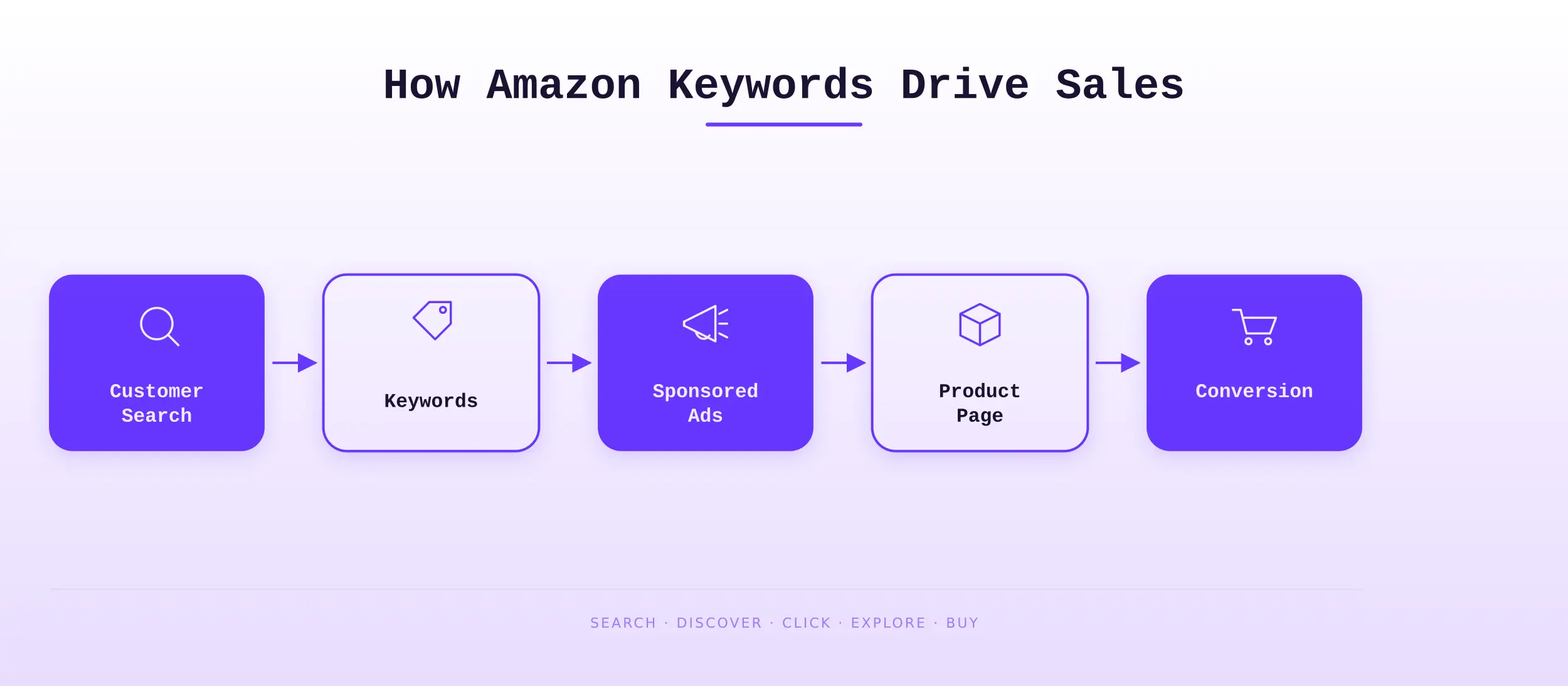
Many sellers focus on:
“What keywords are my competitors using?”
But the better question is:
“What are my customers searching for-and how do I win those searches?”
That shift-from competitor focus to customer intent-is what separates average campaigns from high-performing ones.
Moving Beyond Traditional Keyword Research
Traditional keyword research often relies on:
- Manual brainstorming
- Static keyword tools
- Copying competitor listings
This creates a starting point-but not a scalable system.
A modern approach combines:
1. ASIN-Level Intelligence
Understand which keywords drive traffic and conversions for specific products.
2. Market Trends
Capture changing demand, seasonality, and evolving customer behavior.
3. AI-Driven Expansion
Generate long-tail, high-intent keyword variations at scale.
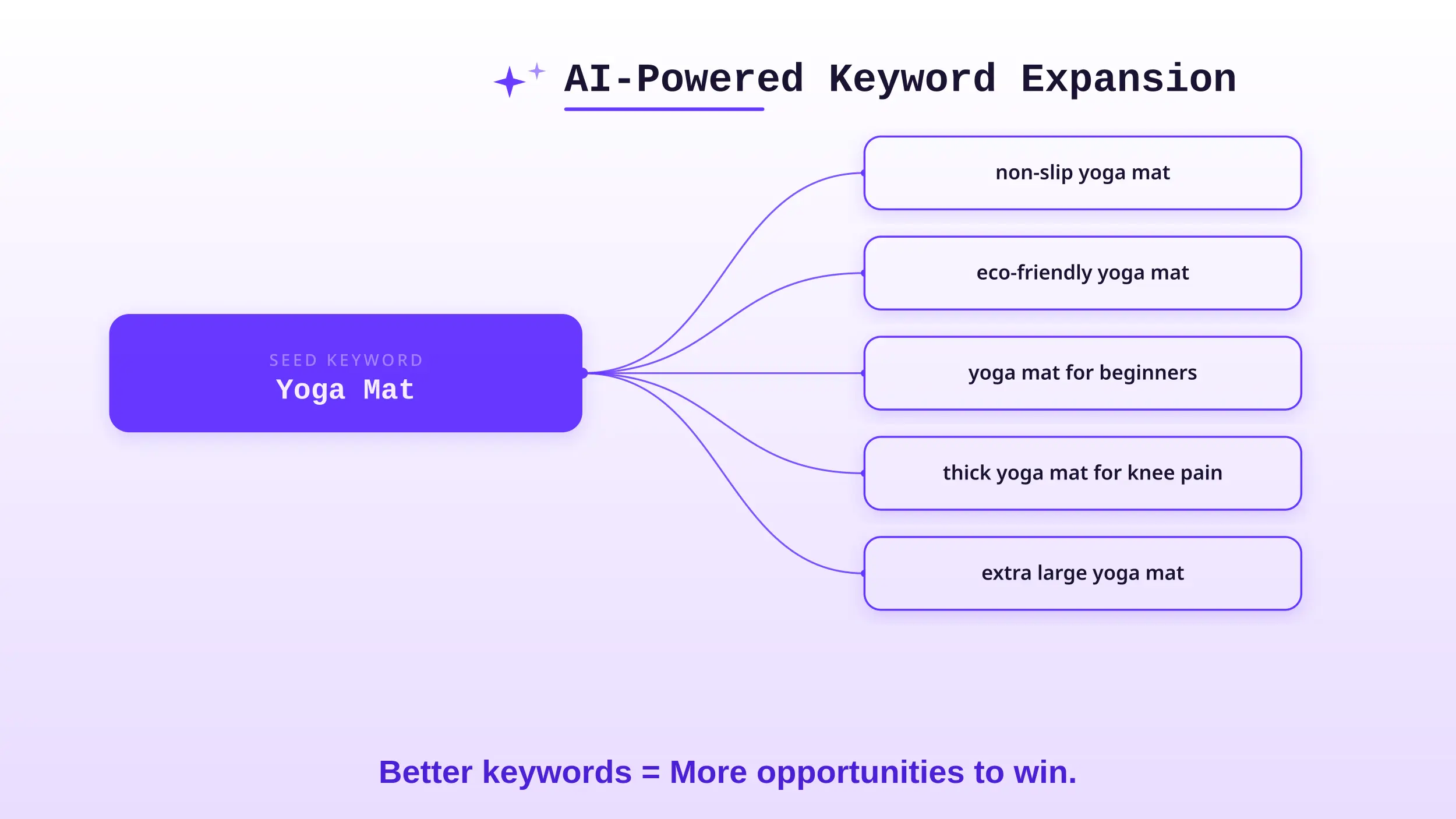
AI helps you think beyond obvious keywords-but suggestions must always be validated with real performance data.
A Structured Approach to Keyword Strategy
To build a scalable system, break keyword research into four core pillars:
1. Discovering New Keyword Opportunities
Keyword discovery should go beyond basic terms.
Include:
- Seed keywords (core terms)
- Long-tail keywords (high intent)
- Use-case keywords (problem-solving queries)
- Trend-based keywords (emerging demand)
The goal is not just more keywords-it’s better, more relevant keywords.
2. Understanding Customer Intent (Not Just Volume)
Not all keywords are equally valuable.
| Keyword | Intent | Value |
| Shoes | Low | ❌ |
| Running shoes for men | Medium | ⚠️ |
| Lightweight running shoes size 9 | High | ✅ |
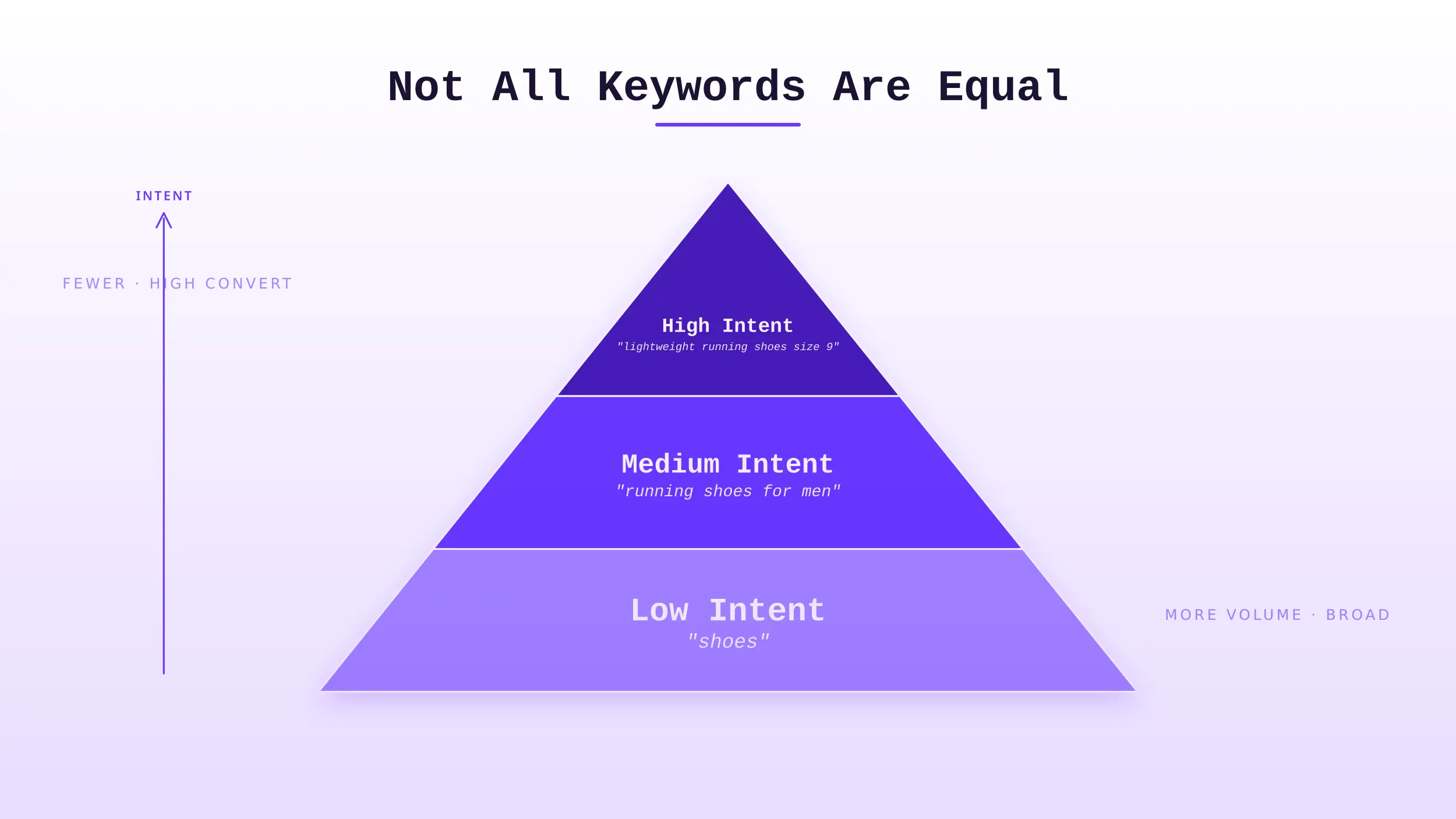
Winning on Amazon is not about more traffic-it’s about qualified traffic that converts.
3. Analyzing Existing Campaigns
Your current campaigns are your best source of truth.
They tell you:
- Which keywords drive sales
- Which ones waste spend
- Which search terms are converting but not yet targeted
A strong system should:
- Promote converting keywords into exact match
- Adjust bids based on performance
- Remove or fix underperforming terms
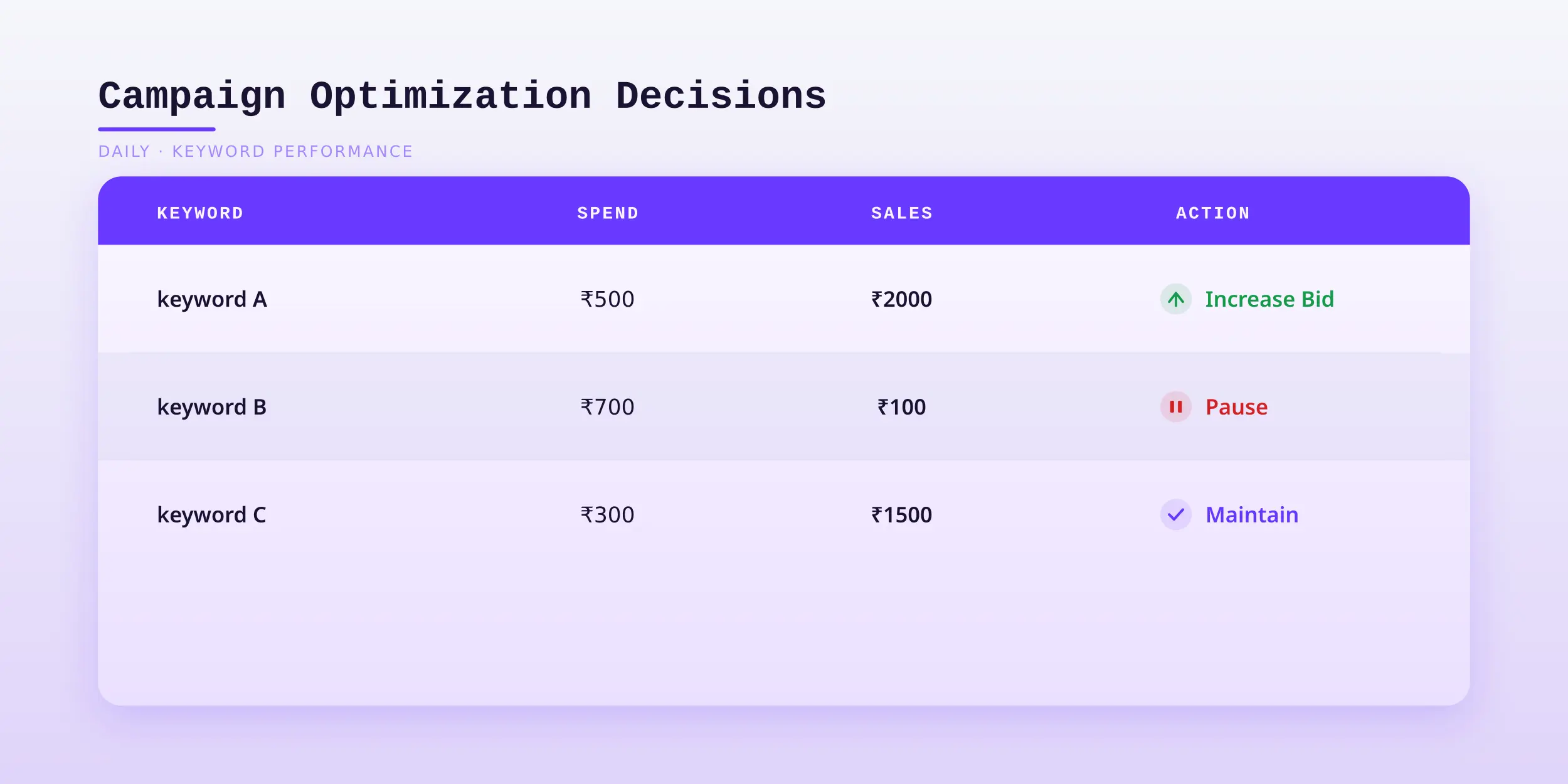
This transforms campaigns into a learning system, not just an expense.
4. Conflict Resolution Across Campaigns
One of the most overlooked problems is keyword conflict.
This happens when:
- The same keyword exists in multiple campaigns
- Match types overlap
- Budgets compete internally
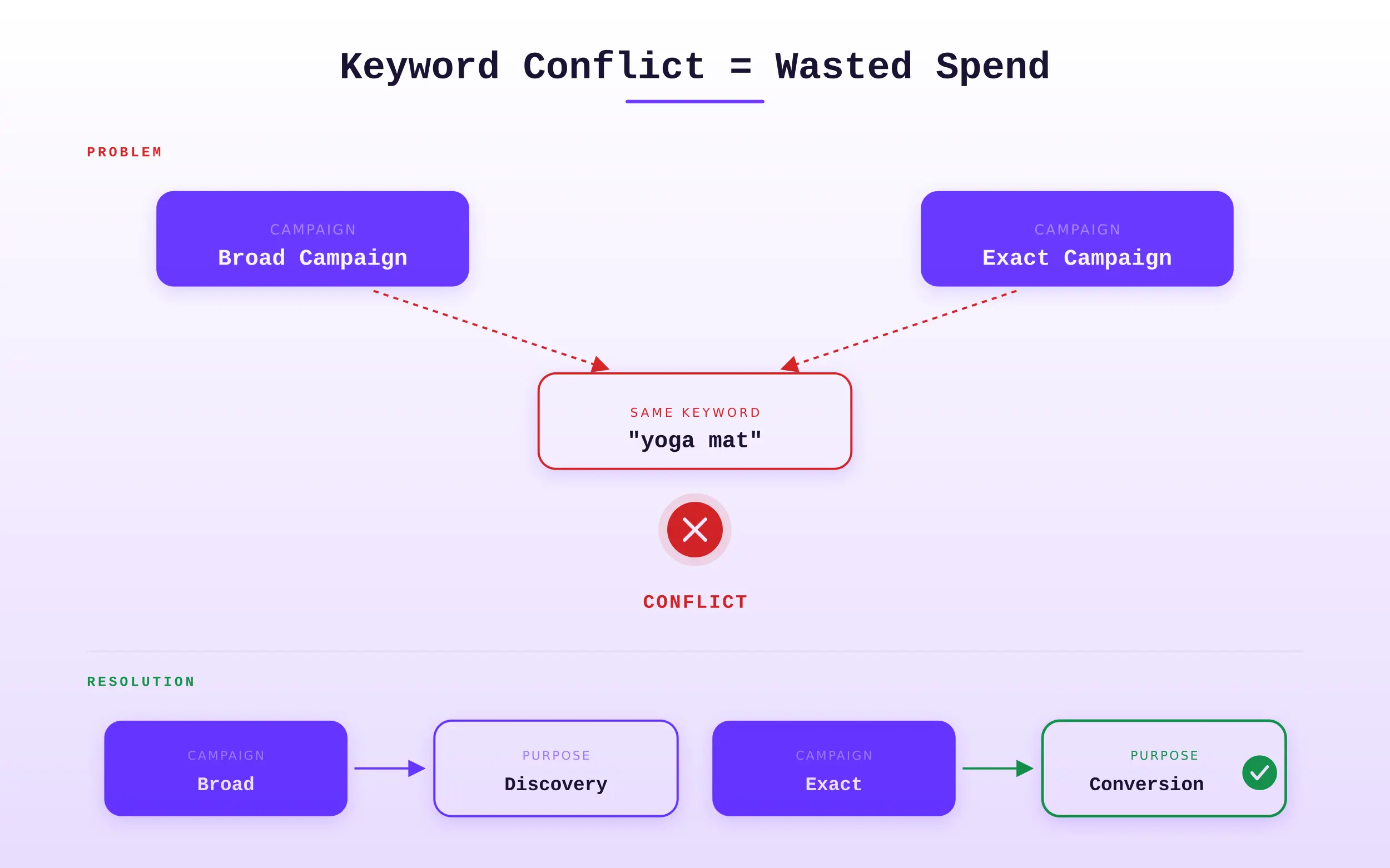
A clean structure ensures:
- Better control
- Lower costs
- Higher efficiency
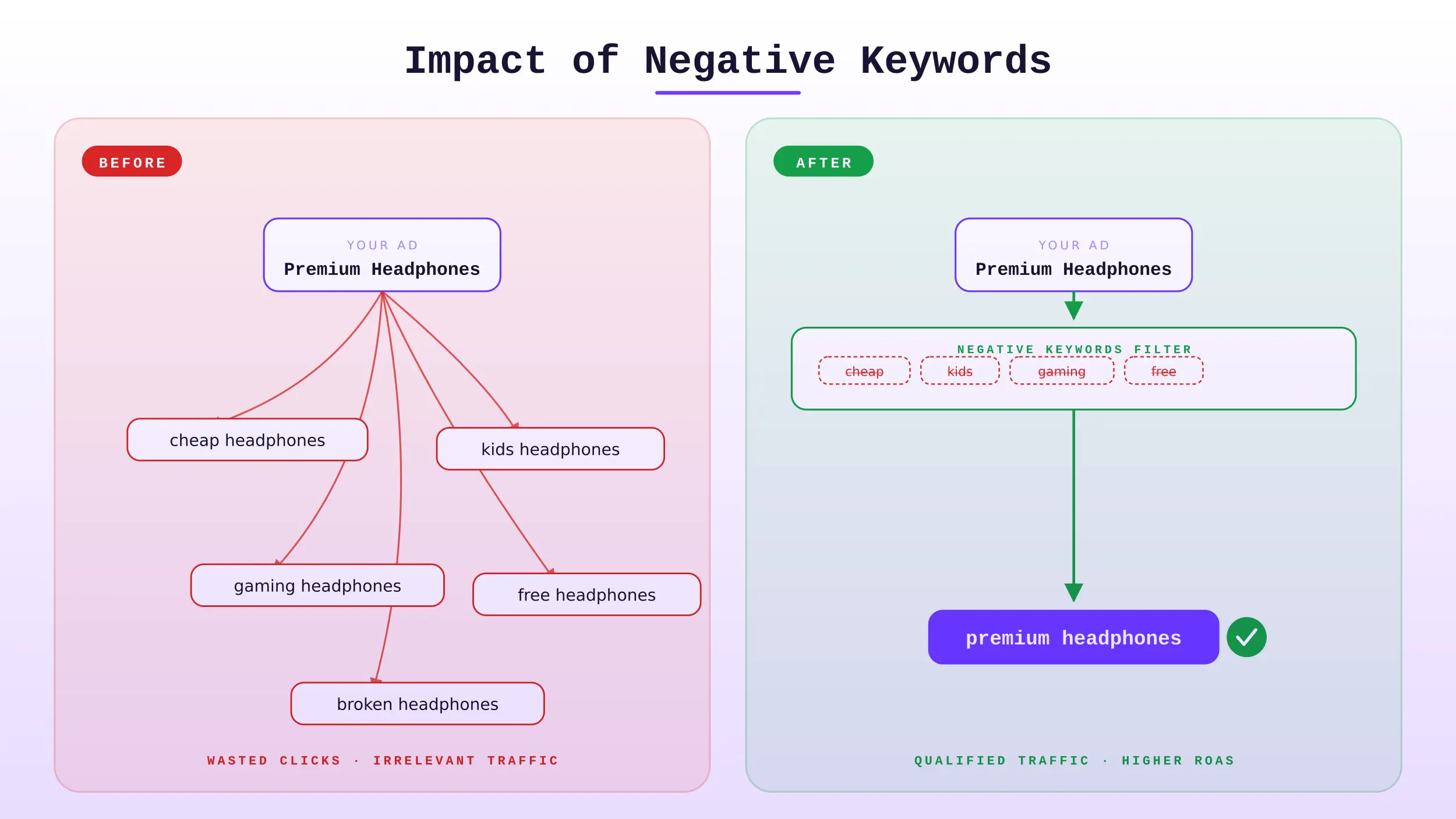
The Role of Negative Keywords
Negative keywords are not just about saving cost-they’re about control.
They help:
- Eliminate irrelevant traffic
- Prevent internal competition
- Improve targeting precision
Two types
- Irrelevant negatives → block unwanted searches
- Strategic negatives → guide traffic between campaigns
Optimizing Match Types and Bids
Match Types
- Broad → Discovery
- Phrase → Controlled expansion
- Exact → High-intent conversion
Bid Optimization
- Increase bids on high performers
- Reduce or pause low performers
- Allocate budget efficiently
Execution is what turns keywords into profitability.
The Continuous Optimization Loop
Keyword research is not a one-time task-it’s a system.
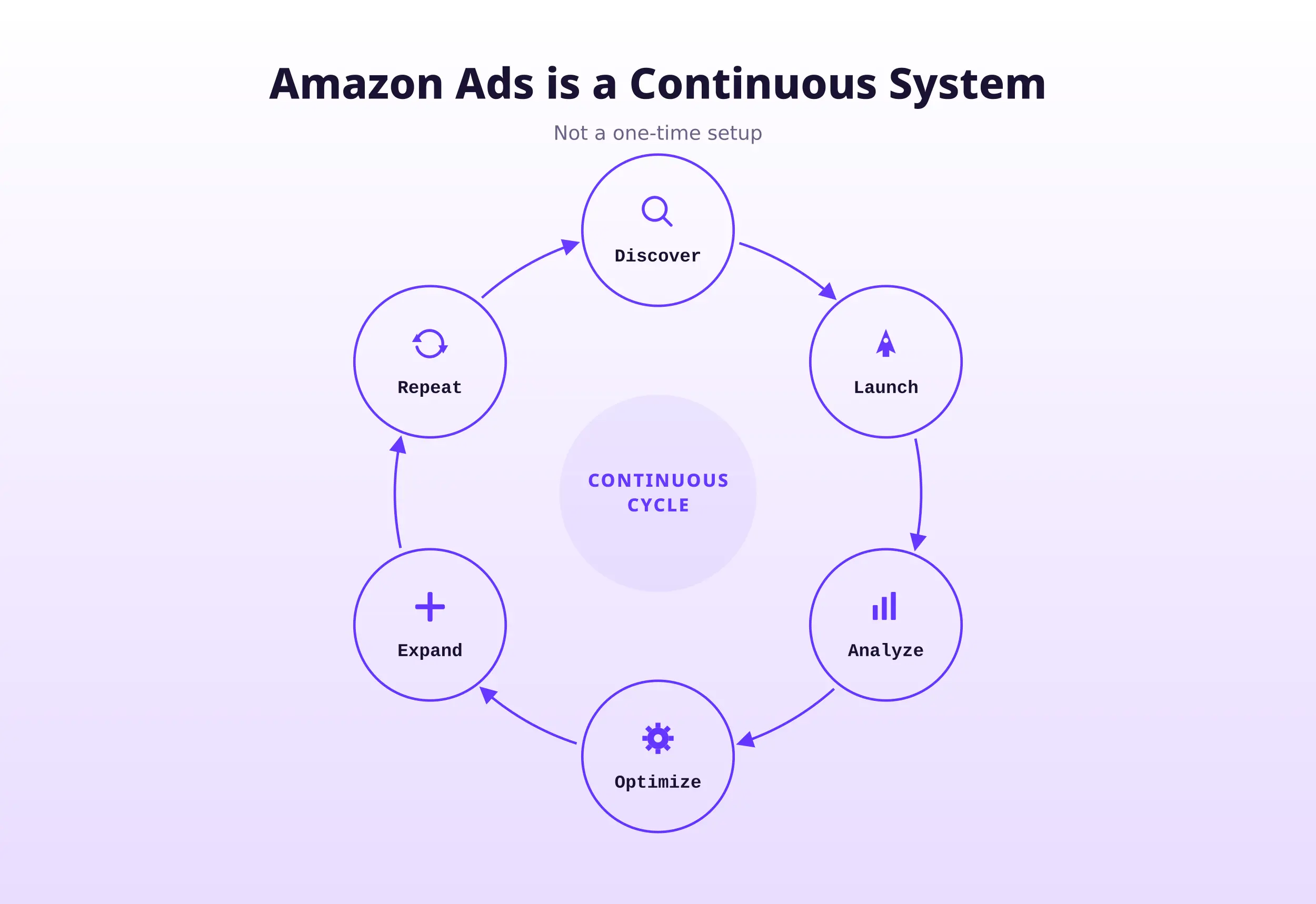
The best sellers:
- Test continuously
- Learn from data
- Adapt quickly
Bringing It All Together: A Smarter Keyword System
A modern keyword system should:
- Combine AI recommendations with real campaign data
- Use ASIN-level insights
- Continuously optimize performance
- Detect and resolve conflicts
- Recommend negative keywords intelligently
It’s not about having more keywords.
It’s about making better decisions consistently.
Final Thoughts: Focus on Customers, Not Just Keywords
Most sellers chase competitor strategies.
Winning sellers focus on:
- Customer intent
- Search behavior
- Continuous improvement
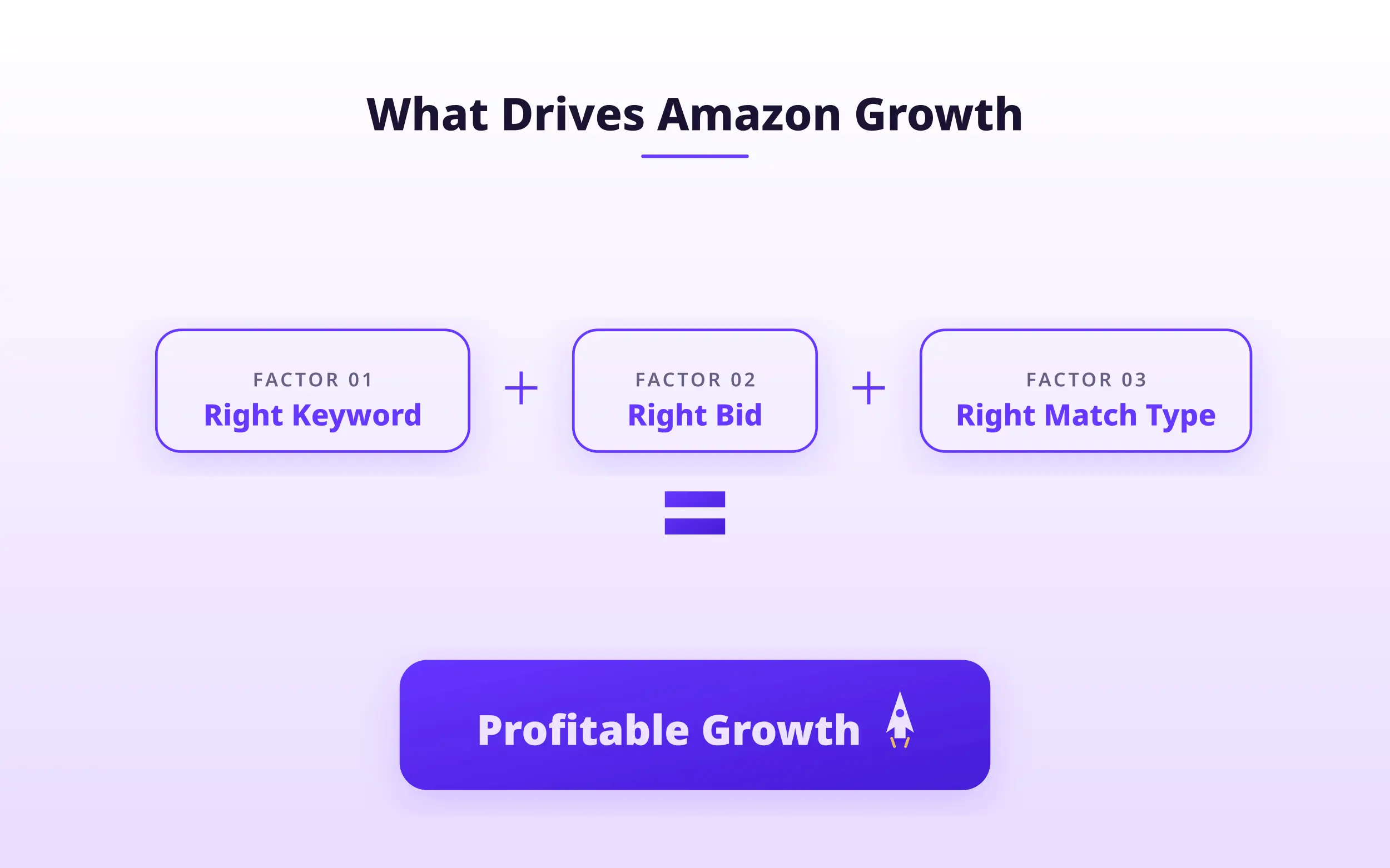
When you align:
- Keywords
- Bids
- Match types
You create a system that scales predictably.
Final Takeaway
Keyword research is not just a marketing activity.
It is the engine behind:
- Visibility
- Conversions
- Revenue growth
Build it as a system-not a one-time task-and it will compound results over time.
Empower your growth with eComSuite’s multi-channel marketing tools.
Get Started
Sign Up - Free