


- By Admin
-
 Prime Day Strategy
-
 26 June, 2026
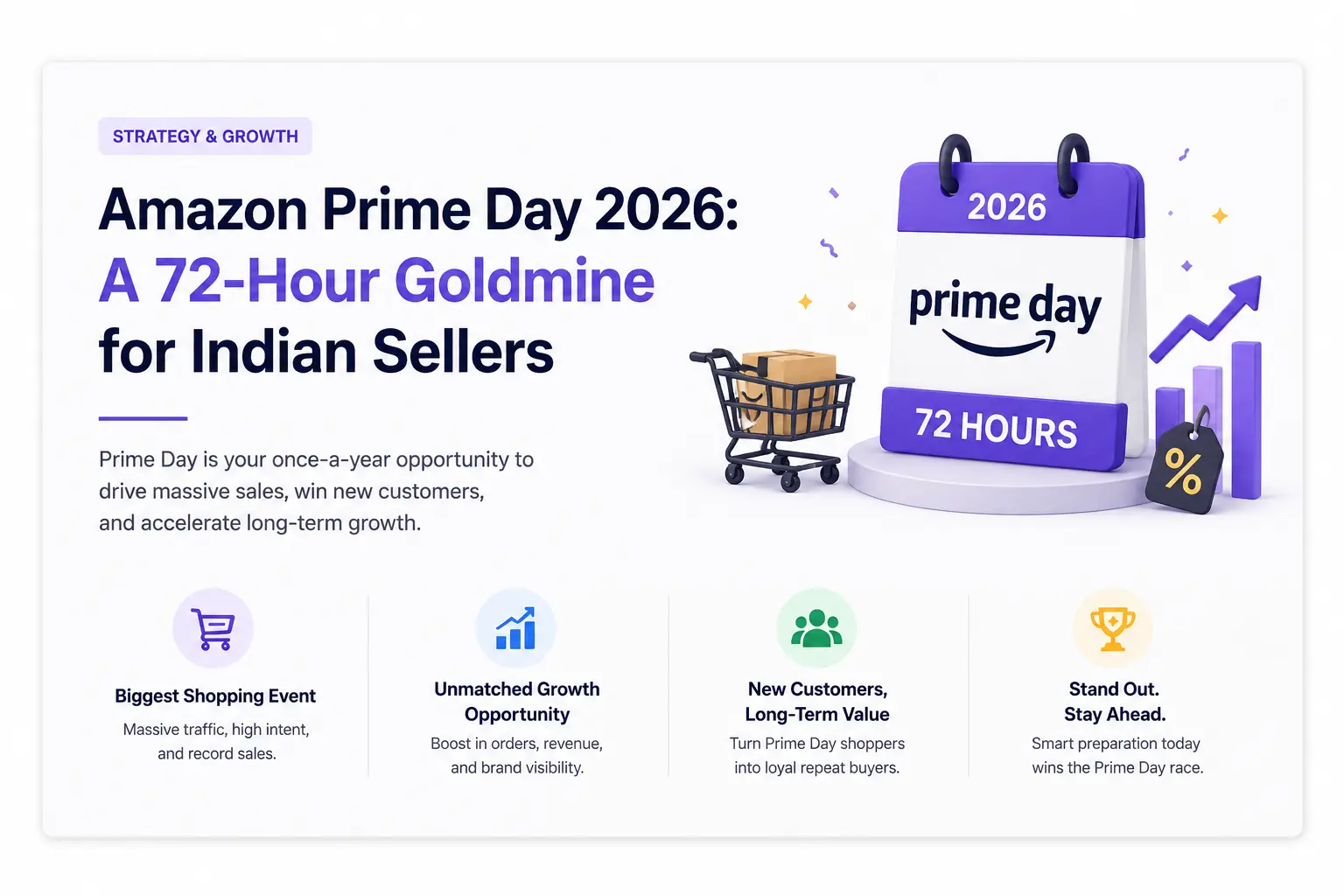
Amazon Prime Day can make or break a seller's quarter. In just 72 hours from July 4-6, brands can either see a surge in sales, rankings, and new customers or burn through ad budgets and stock out their best-selling products. This article breaks down how Indian Amazon sellers can prepare for Prime Day 2026 and how eComSuite helps turn those three days into profitable, well-controlled growth.
How Prime Day Started
Amazon launched Prime Day on July 15, 2015 to celebrate the 20th anniversary of Amazon.com. The first event ran for just 24 hours and was designed as a summer version of Black Friday, offering exclusive deals only for Prime members in nine countries.
Despite mixed reviews about deal quality, the inaugural Prime Day delivered strong sales and set the stage for Prime Day to become a regular feature of the ecommerce calendar. Over the years, Amazon expanded the event's duration, added more countries, and turned Prime Day into a global shopping festival that millions of buyers anticipate every year.
Prime Day's Growth Into a Global Event
From 2015 to 2019, Prime Day was usually held in July, and the duration gradually increased from 24 hours to 48 hours. Even when the pandemic shifted the timing in 2020, the event bounced back and continued growing in sales and participation.
By 2024, Prime Day ran across more than 25 countries and had become one of Amazon's biggest sales events of the year, with billions of dollars in orders placed in just a couple of days. For marketplace sellers around the world, those two or three days can account for a noticeable share of annual revenue and rankings.
Prime Day in India: Records and Momentum
Prime Day has quickly become a marquee event in India. In 2024, Amazon India's Prime Day was its biggest ever, with a peak of about 24,196 orders per minute and the highest number of Prime members shopping compared to any previous Prime Day in the country.
Engagement from small and medium businesses was especially strong. More than 65% of SMBs that received at least one sale were from tier 2 and tier 3 cities, and the event saw over 3,200 new product launches from SMBs. Amazon also recorded the highest ever Prime membership sign-ups in the two-and-a-half weeks leading up to Prime Day 2024 in India, showing that customer interest in the event is still growing.
In 2026, Prime Day's tenth edition in India will run from July 4 at midnight to July 6 at 11:59 pm, with special 10th anniversary deals and expanded offers on categories like smartphones, fashion, and home appliances. For Indian sellers, this means three intense days of high-intent traffic spread across metros and non-metro regions.
Why Prime Day Matters So Much for Sellers
Prime Day matters for sellers because it compresses several advantages into a short window:
- Huge traffic and strong purchase intent from Prime members hunting for deals.
- A surge in orders for hero SKUs, which can lift organic rankings for weeks after the event.
- A wave of new customers from smaller cities and towns who may not normally buy at the same pace.
For sellers who use Sponsored Products ads, Prime Day is also a stress test for advertising discipline. The right bids, budgets, and keywords can deliver excellent return on ad spend, while poor control can burn a lot of money with little conversion.
Practical Prime Day Preparation for Indian Sellers
A simple, practical preparation plan for Prime Day 2026 can focus on five key areas:
Inventory and stock
- Check recent sales data and estimate how much stock you need for at least a Prime Day-level uplift on your best SKUs.
- Avoid over-advertising items that are already close to stocking out.
Pricing and offers
- Plan Prime-exclusive deals, coupons, and bundle offers that are meaningful to customers but still protect your margins.
- Make sure promotional prices are consistent across your catalog to avoid confusing buyers.
Listings and creatives
- Ensure your product titles, bullets, and images clearly highlight key benefits and offers.
- Use clear, mobile-friendly images and copy that help buyers decide quickly.
Advertising strategy
- Decide which SKUs are your Prime Day heroes and prioritize them with stronger bids and budgets.
- Group keywords into themes such as brand, category, and competitor so you can see what's working.
Monitoring and reaction
- Set up views and alerts so you can track budget usage, conversion, and inventory in near real time and adjust during the event.
This is exactly where an operational platform like eComSuite can help non-technical Amazon sellers stay in control without having to dig through raw data.
Ad Pulse: Real-Time Ad Intelligence for Prime Day
Prime Day moves fast, and yesterday's reports are often too late. Ad Pulse gives sellers real-time visibility into how their Sponsored Product campaigns are performing across the day, including traffic, clicks, and conversions by hour.
With Ad Pulse , you can:
- Spot high-performing keywords that are driving conversions efficiently and quickly increase their budgets or bids.
- Identify wasteful keywords that are generating clicks but no sales, so you can pause or bid them down before they drain your budget.
Ad Pulse also tracks how quickly each campaign is consuming its daily budget, highlighting those that are at risk of stopping early in the day. Instead of discovering after Prime Day that your best campaigns went offline for hours, you see the trend live and can react.
Budget Alerts: Never Let Winning Campaigns Go Dark
On Prime Day, many campaigns hit their daily budget caps early because traffic is much higher than usual. When that happens, your ads stop serving right when buyers are most active.
Ad Pulse helps avoid this with:
- Budget usage insights that show the percentage of budget consumed for each campaign.
- Email alerts that go out when a campaign hits 85% or 100% of its daily budget, straight to the seller's inbox.
This gives Indian sellers time to extend budgets or shift spend from underperforming campaigns to winning ones while the event is still live, instead of reacting after the fact.
Performing vs Bleeding Hours: Spend Where It Works
Prime Day traffic and conversion do not stay constant through the day. Some hours deliver a strong combination of traffic and conversions. These are performing hours. Other hours see high spend but weak conversions. These are bleeding hours.
Ad Pulse highlights:
- The hours where your ads earn sales at attractive costs.
- The hours where you are spending with little or no return.
Once you know this pattern, you can make Prime Day far more efficient by shaping when your ads run, instead of treating all 72 hours the same.
eComACT: Turn Insights Into Scheduled Action
eComACT is eComSuite's scheduling feature that lets sellers turn Ad Pulse insights into concrete actions:
- Run ads during performing hours, when your campaigns consistently bring in profitable orders.
- Pause or limit ads during bleeding hours, when conversions dry up and ROAS falls.
For Prime Day, this means you can:
- Create simple hourly schedules for your key campaigns, even if you are not a technical user.
- Push harder during the best-performing windows and preserve budget during weaker periods.
Over a 72-hour event, this type of time-of-day control can significantly improve profitability and makes your ad strategy feel alive instead of static.
Inventory and Sales Insights : Protect Your Bestsellers
Prime Day success depends on having stock for the items that are likely to sell. eComSuite's inventory insights help by:
- Showing SKU runway length based on the average sales of the last 30 days, so you know roughly how many days of stock you have.
- Highlighting top-selling SKUs and region-wise sales trends, helping you see which products are popular in which parts of India.
With this information, you can:
- Prepare extra stock for high-velocity SKUs and key regions before July 4.
- Align your Sponsored Product ads with products that have enough runway, avoiding wasted spend on items that will soon be unavailable.
Keyword IQ: Smarter Keywords for Ads
During Prime Day, your ads are competing in crowded search results. eComSuite's Keyword IQ focuses on suggesting high-potential keywords specifically for your ads, not for rewriting listings.
Keyword IQ helps you:
- Discover new, relevant search terms that buyers use for your category.
- Build or refine Sponsored Product campaigns using these suggested keywords.
Going into Prime Day, you can use Keyword IQ to expand or clean up your keyword sets, then use Ad Pulse to see which of those suggested keywords actually deliver clicks and conversions.
Don't Wait Until July 4
Prime Day 2026 in India, from July 4 to July 6, is a massive opportunity, but it is not the time to rely on guesswork. The middle of a 72-hour rush is the worst possible time to discover that:
- Your best-performing campaign ran out of budget just as traffic peaked.
- Your hero SKU is completely out of stock.
- Half of your ad spend is bleeding away during non-converting hours.
Use eComSuite to identify and fix these issues before the Prime Day rush begins. By getting your inventory, budgets, and ad schedules dialed in now, you can focus on maximizing profit during the event instead of putting out fires.
Book a demo today and see exactly how leading Amazon sellers are using eComSuite to prepare for Prime Day 2026.
With eComSuite, Indian Amazon sellers can:
- Use Ad Pulse to track real-time ad performance, keyword results, budget usage, and performing vs bleeding hours.
- Use eComACT to schedule campaigns so they run when they are most profitable and rest when they are not.
- Rely on inventory and sales insights to protect bestsellers and plan for regional demand.
- Use Keyword IQ to strengthen Sponsored Product targeting with smart keyword suggestions.
The result is a Prime Day plan that feels simple to execute but is deeply data-driven underneath, helping you maximize sales, protect your margins, and build momentum that lasts beyond those 72 hours.